Why Big Campaign Goals Stall (and How Your Lifecycle Stage May Hold the Key)

Can your current operational engine actually carry the weight of your biggest institutional dream?
Nobody launches a massive, institution-defining campaign because they want to play it safe.
When a president, executive director, or CEO steps up to announce a bold, audacious vision like funding full-ride scholarships, launching a new program or initiative, opening a community health center, or building an endowment, that energy is electric. It rallies board members, grabs principal donors, and puts the mission on the map.
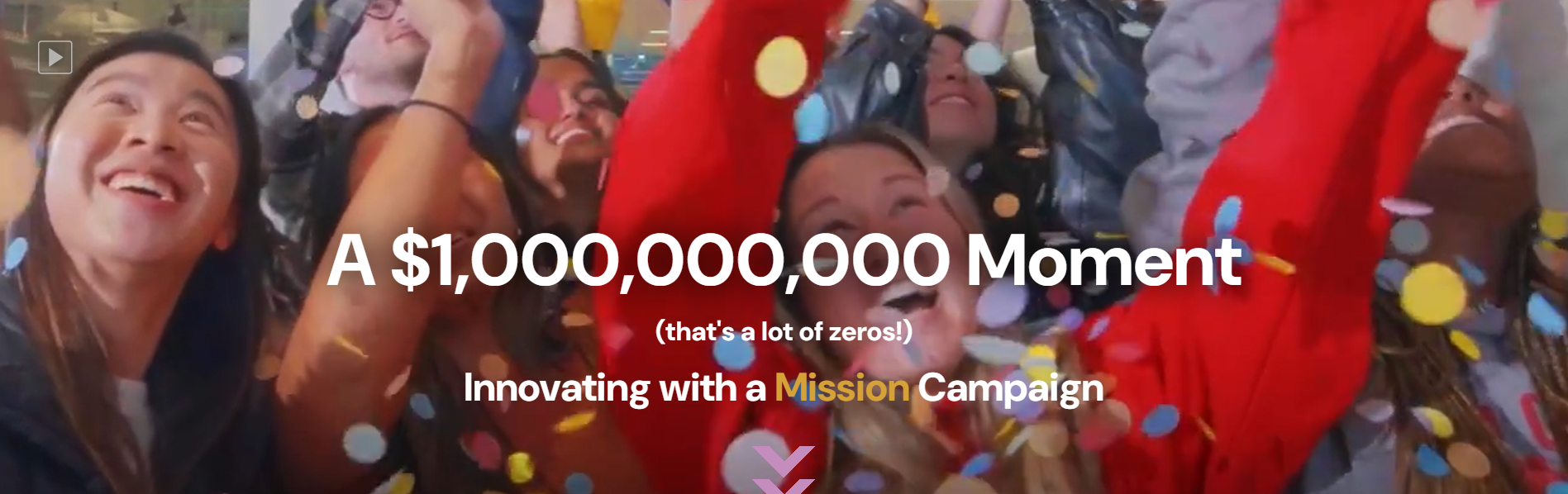
I saw this firsthand as Executive Director of Campaigns at Santa Clara University when our VP of University Relations announced our Innovating with a Mission Campaign with what felt like a shockingly big $1B goal. In the beginning, our staff had the exact reaction so many teams feel when a historic number is put on the table: genuine excitement mixed with trepidation about how we were actually going to pull it off. Even with a seasoned, mature advancement shop like we had, we knew we could not rely on business as usual. We had to intentionally level up our team's skills, systems, and operational resources to make that vision a reality. Making that deliberate internal investment is what carried us to a successful finish line (along with, of course, the 46,000 donors who achieved the $1B goal and transformed my alma mater!).
As a fundraising consultant, that ambition is the last thing I ever want to see an organization dial back. Big dreams attract transformational checks.
It can start off with a burst of energy then the wheels can start to fall off about 18 or so months into a campaign if that mature operational runway has not yet been built. Major gift officers and development directors become discouraged and burnt out doing administrative tasks instead of visiting donors. Your best frontline fundraiser leaves for another organization. Before long, leadership and the board are sitting in a conference room wondering where the campaign momentum went and how you can continue to bring the big dollars in.
When a campaign hits a wall like this, people often blame the economy, donor fatigue, or the fundraisers. They are probably looking in the wrong place.
The campaign goal may not be too ambitious. The real problem may be a nonprofit lifecycle mismatch.
The ambition paradox in advancement
Organizations grow through predictable developmental milestones. If you have ever read Susan Kenny Stevens' classic work Nonprofit Lifecycles or Judith Sharken Simon's The Five Life Stages of Nonprofit Organizations, you know the core argument: different stages of maturity of an organization require fundamentally different systems, staffing, approaches and governance.
The tension in fundraising is that institutional vision often mature much faster and set their sights higher than the back office can keep up with.
Your programmatic footprint, community reputation, and executive ambition might be operating at a fully mature stage. Your advancement operations resources and processes, unfortunately, may still quietly stuck in the adolescence stage.

Launching a mature-stage campaign on an adolescent-stage back office is like opening a 200-seat fine dining restaurant with a two-burner residential stove, two cooks and a single dishwasher. The dining room looks gorgeous, the menu is inspired, and reservations are fully booked for the next three months. However, 45 minutes into your first dinner service, orders back up, tickets get lost, and your kitchen staff is ready to walk out into the alley.
The problem was never the menu. The kitchen simply was not equipped for dinner service at that scale.
Three signs your front of house is outrunning your kitchen
You can spot a nonprofit lifecycle gap long before it shows up in missed quarterly benchmarks. You just have to look at the daily friction:
Your fundraisers are stuck playing database administrator or gift processor: If your frontline team spends half their week pulling manual spreadsheets from your CRM or tracking down whether restricted gifts were properly allocated and spent, they are not meeting with donors.
Turnover eats your momentum alive: When talented fundraisers feel set up to fail by inadequate infrastructure, they usually leave in 6 to 18 months. And when they walk out the door, years of donor trust, institutional knowledge and memory, and relationship history walk right out with them.
Stewardship falls behind gift volume: If a major funder waits 6 weeks for a formal grant or pledge agreement, or first-time donors do not receive a personalized thank-you after giving, donor confidence erodes right when you need it most.
When these cracks appear, boards often assume the wrong fundraisers were hired. Often, that is not true at all. The team is simply trying to carry a mature workload inside an operational setup that cannot hold the weight.
A quick pulse check on your advancement shop lifecycle stage
You do not need a three-month organizational assessment to figure out where your fundraising operations sit today:

Startup stage (hero-driven and ad-hoc): Donor data lives in scattered spreadsheets or an entry-level database. Major gifts depend almost entirely on the personal network of the founder, CEO, or a couple of dedicated board members. If one key person gets sick or resigns, fundraising grinds to a halt.

Adolescent stage (growing pains and duct tape): You have a dedicated CRM and specialized development staff, but the processes lag behind. Fundraisers still do their own prospect research, gift approvals require circular email chains, and hitting targets requires unsustainable individual heroics.

Mature stage (integrated and scalable): Systems run reliably. Frontline fundraisers spend at least 70% of their working hours building relationships with donors and community champions. Acknowledgment workflows operate automatically or smoothly and timely. Board members act as proactive door-openers rather than operational micromanagers.
For more information on these and other stages: I highly recommend the practical resource The Varga Group white paper on nonprofit organizational lifecycles.
If your campaign target requires mature-stage revenue, but your pulse check reveals adolescent systems, you do not necessarily need to dial back your dream. You just found your exact point of leverage.
How to prepare your operations for the goals you want to hit
Wise nonprofit executives and advancement leaders protect their momentum before making campaign promises publicly:
Audit operational capacity alongside donor feasibility: Look at your database architecture, gift processing turnaround, prospect research bandwidth, and staffing ratios just as closely as you look at your prospect pipeline.
Carve out 2% to 5% of early campaign budgets for infrastructure: Dedicating operational dollars money or approaching your board for early seed funding toward CRM modernization, additional administrative or back-office staffing lines, stewardship resources, donor wealth screening tools, and advancement services is what keeps your frontline team in the field.
Help your board evolve from managers to ambassadors: Guide your board members out of the weeds of line-item management and into high-level ambassadorship, opening doors to their personal, philanthropic, and civic networks as well as stewarding your donors.
Track back-office throughput alongside dollars raised: Keep a close eye on gift receipt turnaround times, donor and donation retention rates, and frontline visit volume. If operational metrics flash yellow, fix the bottleneck before it stalls your campaign revenue.

Building permanent momentum over short-term heroics
Transformational fundraising is not about playing small or settling for safe, modest goals. It is about understanding that record-setting campaigns are built on operational stability. When your infrastructure matches the scale of your ambition, your fundraisers stay, your donors feel cared for, and your campaign creates permanent institutional strength and changes the lives of your community.

If you are planning an upcoming campaign and want to make sure your systems, data, and leadership team are built for the climb, let's connect for a confidential campaign readiness pulse check.
We can review your current lifecycle stage and map out the operational runway you need to hit your target.
You got this!


Jen Stirling
Principal Consultant, Brighter Philanthropy —
Fundraising consulting for higher ed, K-12 and non-profits
As your partner, I’ll bring my considerable expertise, high-energy efficiency, optimistic realism, relational approach, and fresh perspective to guide your team and help your organization reach its goals, enabling more of your community to thrive. I offer support for campaign services, development organization assessments, staff coaching and board development.